
Youth(?) Baseball Development
Is it such a thing? And if so, does the industry have it backward?

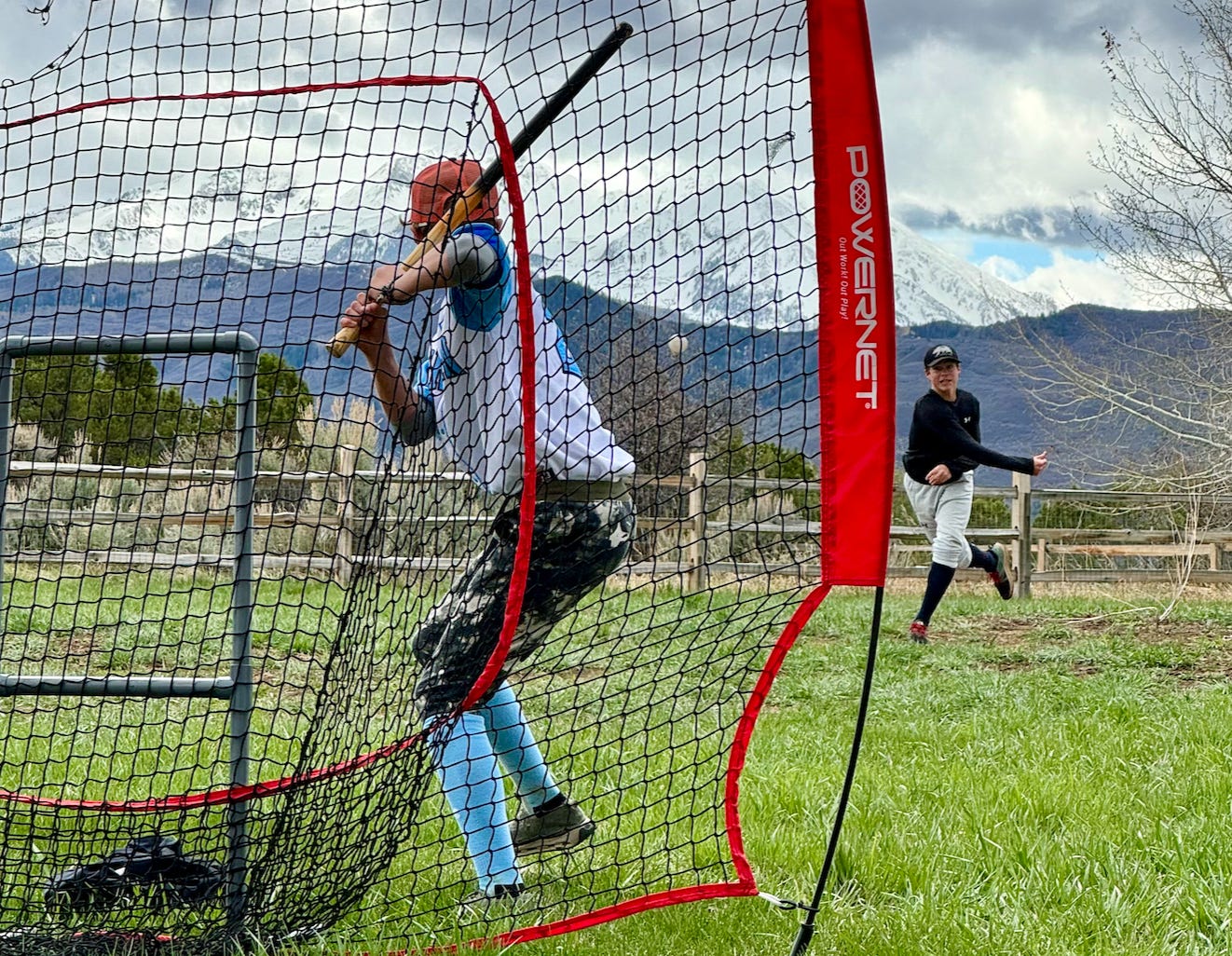
My first thought today is: “When did “youth” baseball development become a thing?” It certainly wasn’t a term or any sort of emphasis for that matter when I was a child. Did it happen during my career? Was it after my retirement but before I began giving attention to the youth level?
This makes me think, “What is youth baseball development, anyhow?” More importantly, “What’s its purpose?” Is it to teach kids the right way to field a ground ball or to swing a bat? Or to build a child into the best player that they can be? Why? Is this some sort of important life skill now? I feel like in the beginning it wasn’t. After all, I always assumed that Little League participation exploding shortly after WWII was a hint of what youth baseball was really about.
But I digress. I know what happened. It was an honest mistake. No different than over-praising a child and making the way easier for them in an attempt to build up their self-esteem. Most of us understand why that didn’t work. Now it’s time to understand why we’ve been developing backward and begin having the conversation of how to balance things out and move the game forward.
Before “youth baseball development” was coined there had only been two types of baseball development models for over one hundred years.
The first model I’ll share is that of professional baseball. For those who haven’t been inside the world of a Major League organization’s minor league farm system, it might come as a shock to learn how laid back the coaching and instruction can be. In large part, players are left on their own to make strides individually. There are suggestions, yet nearly never do-it-this-way-or-you’re-gone ultimatums. They take their daily reps on the field and in the cage typically with little feedback from the staff, and the emphasis on development is centered on gaining experience during that night’s game.
It can be overgeneralized that pro ball — at the minor league level — is less about winning games and more about developing ultimate potential that can contribute to a championship for the big league squad down the road.
The second, the college model, in many ways can be oversimplified into the exact opposite of that of the professional. It’s a level of baseball that is definitely more team-focused and places much more emphasis on winning games right now. Due to that fact, the college model is significantly more structured and organized. Every college program has its own individual philosophies — this is what “fill-in-the-school baseball” is all about. And it’s their way or the highway in order to get players on board and moving them together in the same direction.
In a college program, there is significantly more instruction and coaching to shape players into products that can win ball games for the head coach and his staff. There is less time and freedom for a player to figure out what works best for them — in terms of unlocking their highest ceiling — and more stress placed on how to get the job done now by any means necessary. The danger with the latter is that it can often take a detour to unlocking ultimate potential.
Now, neither model is wrong. They both serve their own purpose. They both have their own advantages and disadvantages.
But here’s why I’ve shared everything thus far: years ago youth baseball began implementing the college model. Why? Because it made young players better faster. Like way faster. But can that be detrimental? I believe that model created multiple long-term problems that most still aren’t aware even exist.
I’ll share some thoughts on that, but before I do, let me just point out a distinction. For me, youth baseball is anything below the high school level. With that said, I don’t frown upon — too much — the college model being implored to a certain extent with high schoolers. It can serve as a preparatory class for the players that do go on to play at the college level. It also will help those whose playing days end with Varsity develop the discipline through a structured system to get the job done and do it in the way the head coach (aka the boss) wants it to be done — basically, preparing them for a future career in the “real world.”
Let me start some explanations with an old baseballism: that water can only be poured to the top of the cup. That adage is in reference to the fact that no matter how quickly or slowly (in terms of age) a player develops in talent or skill, ultimately, there is a genetic potential limitation placed on them. But that warrants an important question: Is one better than the other? I’ll come back to that.
Early in my professional career, I found a book entitled, Body Mind Mastery, written by an NCAA champion gymnast named Dan Millman (He’s more well known for penning the book turned film, The Peaceful Warrior). His book struck a chord with me with his natural laws of adaptation and detachment and effortless ease — it really guided me into a balance and out of my own tendencies to live in anxiety, stress, and overwhelm.
One of the beliefs he expressed was that with serious dedication an athlete will have fully developed their personal potential of a skill within three to four years of training. The time spent training the skill after that mark is mostly dedicated to maintenance, and hopefully, a few percentage points of incredibly hard-earned improvement. I’ve had that concept in my mind over the last two decades, and without fail, I’ve seen it hold true across all major sports.
But what does that mean for a ballplayer? It means that regardless of whether a hitter begins dedicating time to developing their swing mechanics at age eight or age twelve, their stroke is going to end up being exactly the same by age sixteen. Again, take this only as theoretical if you’d like, but from my eyes I view it as a law that having a young child — whether six or eight or ten years old — take hitting lessons in a highly structured environment with constant feedback (from a coach or instructor) serves zero long-term advantage. In fact, I believe those early gains will likely come with a significant cost down the road.
What cost? Well, that brings up other questions to answer first. If the college model has only been promoted and marketed (by businesses) as “the way” of youth baseball development for only the last ten to fifteen years — the next questions are — what were kids before that doing? And what were they learning in order to become high-level hitters as they got older?
Since my youth baseball took place before this “development” shift to the college model, and the fact that I was a late physical bloomer who never began working on my swing mechanics until the age of 16, I feel I can offer some suggestions on what was developed in my early years (and even the beginning of my teens) that led to my success at the game’s highest levels. And in some shape or form, they are all tied into failure.
First, passion and resilience. My younger days were met with constant failure. I learned to have fun and love the game and developed a desire to become better even without the “high” of being good at it. I don’t know if the value of that can be emphasized enough. Often when I see a young kid with incredibly advanced mechanics, a swing that absolutely blasts their age group’s pitching, I wonder how they’ll respond one day when they go 3 for 21. Because it is coming. And if you play this game for a very long time, it’s going to happen many many times. Will this kid figure out how to get through adversity for the first time when he’s older? How much of his joy and passion is actually connected to the game, and not merely just the attention received for being really good at something?
Which leads me into the second point, when hitting struggles do come for this kid, what does he do to get back on track? I often refer to development as counterintuitive — it’s amazing I’ve gone this far without mentioning so — and that despite the prevailing thinking of today’s youth game, I believe that mechanics are not part of early childhood fundamentals, but rather a later stage process.
One reason being, is that successful hitting is due to an external focus — having all of one’s attention on the ball and allowing themselves to react to it. Instruction and mechanical teachings are largely based on internal focus — having the hitter be present to the set up and movement of their body. As children, facing pitching that often doesn’t have overpowering velocity nor deceptive off-speed offerings, a hitter can get away with more internal focus while batting. But that day will soon end.
Along with this point, a young hitter that is technically trained I’ve found will always resort to their swing as the answer to a lack of hitting. This may appear to be true at first glance, but it’s an illusion. There are nearly infinite “invisible” variables that influence the quality of a swing, and to develop true consistency and the ability to make mid-at-bat adjustments a hitter must become aware of theirs.
A young hitter that has been guided to analyze their own swing or have an overseeing coach or instructor in constant mechanical feedback over every out, will never even start the journey of learning the art of hitting. They’ll never even become aware of its existence. Myself, growing up in a small town without instruction, academies, or even travel ball, I learned at a young age how my thoughts and emotions influenced my swing and my results in the batter’s box. It was my sole focus for many years, and was always my default mode to get back on track, even after I developed a great swing.
I’ve got a few more, but I’m running over my word limit, so I’ll end with this: self-confidence. I struggled for a long time early in this game. I had little to no guidance for so many years. I had to experiment through trial and error to see what worked for me. I learned how to learn on my own. I developed passion for the game itself, and resilience through hardship. I learned creativity which I believe now to be the backbone of adaptability.
Then when success finally came, still just shy of getting proper swing instruction, I grew confident in myself, like unshakably self-confident. For I knew I could come out on top of anything, and no cold streak for the rest of my career ever left me questioning that I wouldn’t get out of it. From the age of 16 on — even though I was never considered a pro prospect during high school and had next to nil interest from colleges — I don’t recall a single moment where I doubted I would play in the big leagues someday.
I often wonder for the kids who rake early on — is their swagger and air of confidence truly real? Or is it an untested bubble of self-confidence that could possibly burst? In professional baseball — and I’ll assume the same at top collegiate programs — it’s amazing how many highly touted prospects, many who are first-rounders and even top-ten picks, have that bubble popped. They quickly become shells of the childhood and amateur beasts they once were. And that was even before the youth game changed.
As I see now, I haven’t even begun to touch on all angles of this. I haven’t even brought up the similar thoughts of disadvantage for developing arm and bat speed (both that oddly follow the law of 3-4 years too) too early as well.
If youth baseball development is such a thing (and it’s no longer just child development) and making better high-level ballplayers is important, then it’s time to keep the college model for later on, and begin focusing on what is a true foundation for these athletes — that serves them long-term in the game and for their inevitable life afterward.
Because I do believe that water can only be poured to the height of the cup, but I have a feeling that the cup can be made wider for our youth. Meaning, that not depth but rather breadth — is the path to going beyond potential. But more on that another time.
Aim High & Swing Hard — JB


All posts of HAVE BAT, WILL TRAVEL are written by former major leaguer and fifteen-year pro hitter, Jason Botts. Since retiring, Jason began mentoring and providing private mindset coaching to athletes across all sports. He now lives in Colorado, where he’s become obsessed with skiing, teaching his two sons the game, and ungodly long walks with the love of his life, Sarah.
He still works virtually with clients, and in his spare time, he’s dedicated to writing about baseball — with his most passionate topics centering around the art of hitting and the counterintuitive nature of player development.
To get in touch with Jason — with any questions, comments, criticism or sarcastic remarks — use the button to message him directly.
**Mentorship & Mental Coaching spots soon opening up for highly-committed up-and-coming athletes. Message below for interest and availability.**